Ask, Don't Shout: The New Etiquette of Requesting Tunes at UK Soul Nights
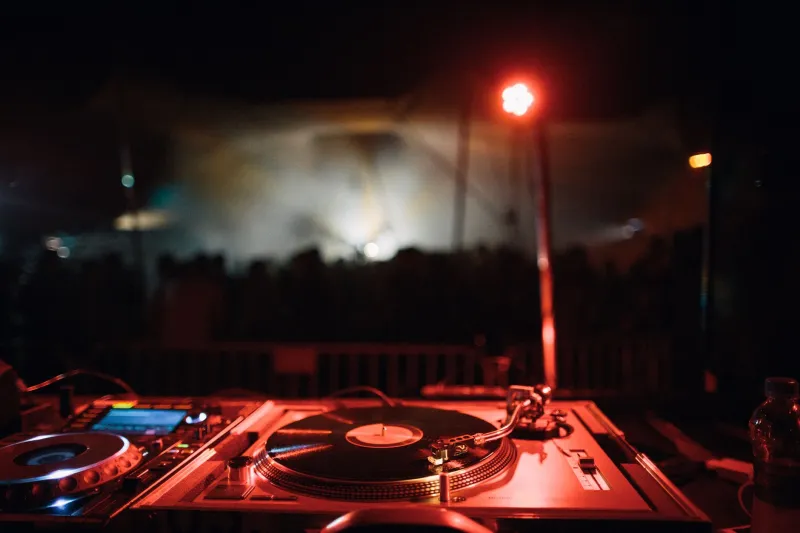
The folded fiver pressed into a DJ's palm. The shouted title over the top of a 45. The slightly apologetic note passed along the bar. For decades, the request has been the most human — and most awkward — part of a UK soul night. In 2026, it is being rebuilt.
From Fivers to Forms
At a growing number of nights from Leeds to Bristol, the paper slip is still there, but it sits next to a QR code. Scan it and you get a short form: name of the tune, artist, why you want it, and a box marked 'happy to wait'. Promoters say the form is not about surveillance. It is about triage. 'We were getting the same twelve tunes every week, and the same twelve people were getting them,' says one Manchester promoter who runs a monthly soul and funk night. 'The form lets us see the whole room's appetite, not just the loudest corner.'
The shift is practical. A queue of slips can be sorted in seconds. A QR form can be filtered by tempo, by era, by whether the record is actually in the box. It also removes the awkward moment when a request is shouted at a DJ who is mid-mix, cueing a £40 import. 'The form is a buffer,' says a DJ who has run booths in London and Sheffield since the late 1990s. 'It lets me say no without a face-to-face negotiation.'
The Queue Is the Point
But the request is not just admin. It is a social contract. At the best nights, the queue of slips is a conversation — a visible record of what the room wants. Some promoters now read out a handful of requests before the headline set, turning the slips into a warm-up ritual. Others pin them to a board near the merch stall, so you can see what is coming. 'It makes the dancefloor feel less like an audience and more like a committee,' says a regular at a South London soul night. 'You see your slip up there and you feel seen. Even if the DJ plays it at 1am.'
The risk is that the request becomes a performance. QR forms can be gamed. A well-organised WhatsApp group can flood the queue. Promoters are already wise to it. Some cap requests per person. Others weight them by time of arrival, or by whether the requester has been in the room for the warm-up. 'It is not a voting system,' says one Bristol promoter. 'It is a signal. We still curate.'
Deep Cuts vs. Sure Things
Every soul DJ knows the tension. Play the anthem and the floor erupts. Play the deep cut and half the room heads to the bar. The request is where that tension becomes public. In 2026, more nights are using requests to solve the problem rather than dodge it. A pre-show wishlist — sent out with the ticket confirmation — lets regulars flag the obscurities they want to hear. The DJ can then build a set that threads the needle: a sure thing, a left turn, a request that doubles as a discovery.
'You can't just play the top ten from Discogs,' says a Nottingham-based selector. 'But you can play a B-side that sounds like the top ten. Requests help you find the B-sides that the room already knows.' The best request systems, he says, are the ones that give the DJ permission to say 'I don't have that, but I have this' — and for the requester to trust the swap.
The Guest Selector Slot
The most interesting development is the guest selector slot. Instead of a request, you get five minutes. A handful of nights now raffle a short set among the request slips, or invite the most thoughtful requester to bring three records and explain them. It is a small democratisation of the booth, and it changes the tone. 'When someone has to stand behind the decks, they stop asking for the same tune every week,' says a promoter in Glasgow. 'They start thinking about the room.'
The slot is not for everyone. It takes nerve, and it can kill a vibe if the guest misjudges it. But as a gesture, it works. It says the request is not a transaction. It is an invitation.
When the Booth Says No
Not every request can be met, and the best nights are honest about it. Some DJs now keep a visible no list — tunes that are overplayed, or that they simply cannot play without losing the floor. Others explain the refusal in the moment: 'I'll play it at the end, if we get there.' The key, promoters say, is transparency. A request that is acknowledged, even if declined, feels better than one that disappears into a pocket.
The request is also a barometer. If the same tune is asked for every week, that is data. It might be time to book the artist, or to run a tribute night, or to admit that the room wants something the DJ is not giving. 'The slips tell you what the scene is missing,' says one archivist who runs a soul night in the North West. 'You ignore them at your peril.'
The Democratic Floor
The request has always been a small act of hope. You hand over a title and wait. In 2026, the ritual is more organised, more digital, and more contested. But the goal is the same: to make the dancefloor feel like it belongs to the people on it. Not a jukebox. A conversation. And if the DJ plays your tune at the right moment, the whole room knows whose slip it was. That is the point.