Handshake Before the Hook: How UK Soul Producers Are Making Sampling Pay Properly
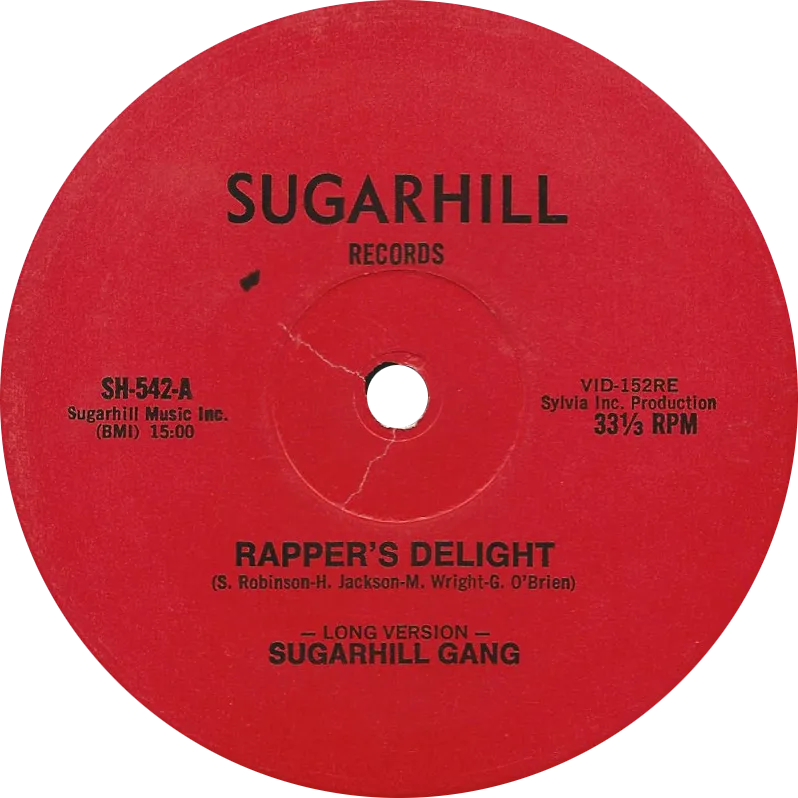
Photo: Sugarhill Records (Sugar Hill Records), Public domain, via Wikimedia Commons
There is a moment in every crate-digging session when a drum break, a guitar lick or a half-heard vocal turns into a question: what if this could be a new record? For decades, UK soul and funk producers have answered that question with samplers, sequencers and a healthy disregard for the cost of a lawyer. But in 2026, the conversation has shifted. A new generation is building groove music from old records while trying to make the paperwork as soulful as the loop — credit first, clearance second, and no pretending the original artist did not exist.
The crate is not a crime scene
Walk into any decent record shop in Manchester, Bristol or Peckham and you will hear the same defence of sampling: it is how music has always worked. A lick gets passed around, a drummer plays a variation, a singer borrows a phrasing. The difference now is that the source is traceable, and the internet has made sure everyone can find it. That has made the ethics harder to dodge.
‘I grew up on jungle, garage and hip-hop, so sampling felt like language,’ says Nadia Clarke, a South London producer and DJ who records as Clarke & The Quiet. ‘But when I started making soul records, I did not want to be the person who took a riff from a dead session musician and never said thank you. The sample is a love letter. You have to write it properly.’
Clarke’s latest EP uses an interpolation rather than a direct sample: a horn line from a 1970s Brit-funk B-side, replayed by a live brass section and credited to the original composer. It cost more than a straight lift would have done. It also meant she could sleep at night.
From Brit-funk to bedroom studio
The UK has its own sampling history, and it is not all American. The 1980s Brit-funk and lovers-rock scenes produced a mountain of local records that were often pressed in small runs and forgotten by the major labels. Those records are now being rediscovered by producers who want a sound that feels closer to home than a Miami breakbeat. The result is a new strain of UK soul that sounds like a conversation between a council estate youth club and a modern DAW.
‘There is a particular swing in old UK funk that you do not get from a sample pack,’ says Tom ‘Tee’ Okafor, a Leeds-based producer who runs the Dust & Groove night mentioned elsewhere on this site. ‘The timing is a bit loose, the tuning is a bit off, and the room sound is there. You can try to fake it, but it is easier to sample it and then build something new on top.’
Okafor’s approach is increasingly common: find a two-bar loop, replay the parts that matter, and use the original only as texture. That way the new record has a life of its own, and the credit is clearer. It also means the producer is not relying on a single master recording that might be tied up in a licensing maze.
What clearance actually looks like
Ask a music lawyer about sampling and you will hear two words: master and publishing. The master is the recording itself, usually owned by a label. The publishing is the composition, usually owned by the songwriter or publisher. You need permission for both, and in the UK that can mean dealing with PRS for Music, PPL, a small independent label and a publisher who may or may not answer emails.
‘The biggest myth is that there is a standard fee,’ says Priya Shah, a London-based music lawyer who works with independent soul labels. ‘There is no standard. It depends on the use, the length, the territory, the profile of the new artist and whether the original writer likes what you have done. The best thing a producer can do is be honest early and keep a paper trail.’
Shah says she is seeing more UK producers budget for clearance from the start, rather than waiting for a release to blow up. That might mean offering an upfront fee plus a percentage of publishing, or agreeing a split that recognises the original writer’s contribution. It is not glamorous, but it is how the scene avoids the familiar story of a young artist getting a legal letter years later.
Credit where it is due
Credit is not just a legal requirement. It is a culture. In the UK soul scene, the names on the sleeve matter: the session drummer, the arranger, the label owner who paid for the studio time. When a producer samples a record, they are borrowing from a chain of people who often did not get rich the first time around.
That is why some producers are building credit into the creative process. They list the original writers in the metadata, put the source on the sleeve, and use a split sheet before the track is finished. It slows things down. It also builds trust.
‘I have had older musicians message me to say thank you for crediting them,’ Clarke says. ‘That is worth more than a playlist add. It means the door is open for a collaboration, or for them to come and play on the next record.’
The dancefloor test
None of this matters if the record does not work in a room. And that is the final check: does the sample serve the song, or is it just a badge of taste? The best UK soul and funk records of 2026 use sampling the way a DJ uses a transition — to connect two things that already belong together, and to make the crowd feel like they have discovered something.
‘You can tell when a sample is a shortcut,’ Okafor says. ‘The track has no space. It is just a loop with a vocal on top. The ones that last are the ones where the producer has added something: a new bassline, a different drum pattern, a bridge that takes the original somewhere else.’
That is the difference between homage and theft. The sample is a love letter, but the letter has to say something new. It has to name the person it is addressed to. And it has to be sent with the right postage. In 2026, the UK producers doing the work are proving that you can build a groove from the past without cheating the people who made it.