Low-End Theory: The UK Bassists Stepping Out of the Shadows and Into the Spotlight
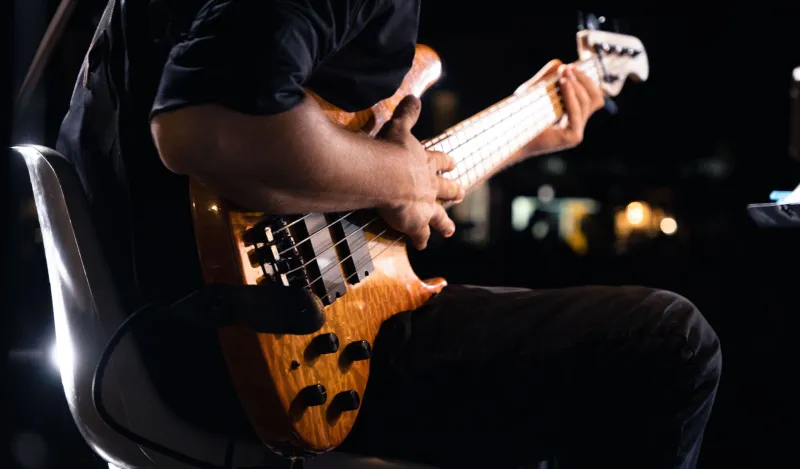
There is a particular kind of silence that follows a bass solo at a soul night. Not the bad kind — the good kind. The half-second where two hundred people realise they have been dancing to this person all night and have never once looked at them.
That silence is getting shorter. Across the UK, the bass chair is turning into a stage position in its own right, and the people who have spent a decade holding down other artists' records are stepping into the light.
The chair nobody clapped for
Ask anyone who has played in a working funk band and they will tell you the same thing: the bassist is the reason the room moves and the last person the audience remembers. Session work rewards invisibility. You are there to make the vocal sound expensive, the drums sound bigger, the whole thing feel effortless. Do it well and nobody notices you at all.
The shift we are seeing in 2026 is not really about ego. It is about economics and attention catching up with craft. Streaming has flattened the middle of the market, live ticket prices have pushed punters towards nights that promise a proper band, and a groove-led record is suddenly a selling point rather than a compromise.
"People used to ask me what else I did," says Marisa Okafor, a south London bassist who has quietly appeared on a stack of UK soul releases over the past few years and now leads her own four-piece. "Now they ask me when the next one's coming out. That's the whole change, honestly. The question flipped."
Three cities, three approaches
Okafor's outfit plays the kind of loose, mid-tempo soul that sounds like it was recorded at 2am and probably was. She writes from the bassline up — literally humming a low melody into her phone, then building chords around it, then handing the whole thing to a singer to finish. It is the reverse of how most of her session work arrived.
In Manchester, the story is dirtier. Dev Ashworth came out of the city's funk and boogie party circuit, spent years depping in other people's bands, and now runs a small label with two friends putting out 45s that sell mostly at gigs. His records are built around a bass tone thick enough to lean on, and he is unapologetic about it.
"I got tired of being the thing that got compressed out of the mix," he says. "So now I mix my own stuff and the bass sits where I want it. Funny how that works."
Bristol brings a third flavour. Kaya Mensah plays in a dub-influenced soul band and has started producing for other artists, deliberately hiring bassists as featured players rather than anonymous hands. Her argument is simple: if a horn solo gets a credit on the sleeve, so should the low end.
Groove-first songwriting
What connects all three is a structural instinct. These are records where the bassline arrives before the hook, where the arrangement follows the pocket rather than the topline, where the middle eight is allowed to just sit in a groove for eight bars longer than a radio editor would like.
That approach travels well in a live room. It also travels well on a dancefloor, which matters more than anyone in a boardroom tends to admit. A vocal can be forgotten by the time you reach the bus stop. A bassline follows you home.
There is a practical reason too. Bass-led writing is cheap. You do not need a string section or a vintage organ to make a groove work. You need a player, a drum kit, and enough restraint to leave space. In a year when everyone is watching their budgets, that is not a small thing.
What the crowd actually wants
Spend a few nights out this autumn and the pattern is hard to miss. Promoters are putting the band name on the flyer with the musicians listed underneath rather than buried in a tagline. Small rooms are selling out on the promise of a rhythm section. The crowd, for its part, has started facing the low end instead of the vocal mic.
"It's a physical thing," Okafor reckons. "You don't need to know anything about music to feel it. People know when it's good. They just didn't know whose job it was."
The hurdle that remains
It would be tidy to declare the battle won. It is not quite. Session fees are still flat, and the same players who headline a 200-cap room on a Saturday are back in a rehearsal studio on Monday playing someone else's charts for a day rate.
But the direction is clear. Credit lists are getting longer. Promoters are putting bassists in the artist bio rather than the thank-yous. And a younger crop of players coming through are watching people who look like them take the front of the stage — which, in the long run, is the bit that actually changes a scene.
The low end has always done the work. In 2026 it is finally getting the name check.