Platform Shoes: Why UK Soul Nights Are Being Timetabled Like Trains
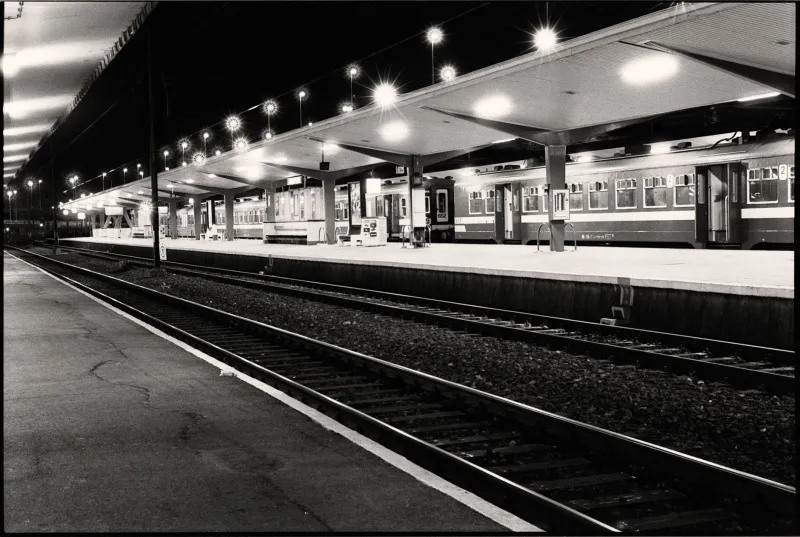
On a Saturday night in Leeds, the dancefloor is still full when the first announcement cuts through the bass. It isn’t the bar calling time. It’s the promoter, microphone in hand, gently reminding a room of grown adults that the 23:42 to Sheffield is the last realistic route home. A few people laugh. A few check their phones. Then a handful drift towards the cloakroom, shoes in hand, trying to look casual about the fact that the night’s final chorus is about to happen without them.
This is the quiet reality of the UK soul scene in 2026. The music may be timeless, but the trains are not. Promoters up and down the country are building their nights around railway timetables — not because they want to, but because the last service home has become one of the most powerful forces on the dancefloor.
The timetable as co-promoter
Ask anyone who runs a funk or soul night and they will tell you that the headline slot is no longer just about who is hot. It is about who can be packed, paid and pointed towards a platform before the last train. A brilliant DJ who comes on at midnight is no use if half the room has to leave at 11.40pm to make a connection at Crewe.
So the timetable has become an unofficial member of the booking committee. Promoters are pulling headliners forward, shortening changeovers and treating the closing record less like a sacred ritual and more like a piece of logistics. In some rooms, stage times now go out on social media with train times printed beside them. It is not glamorous. It is, however, useful.
The result is a night that feels slightly different from the old model — less a marathon, more a well-paced sprint with a few emotional detours. The best promoters are not fighting the railway. They are choreographing around it.
The station-adjacent advantage
Transport geography has always shaped which rooms thrive, but in 2026 it is doing so more openly. A venue within a five-minute walk of a main station has a distinct advantage over one that needs a taxi, a bus and a small act of faith. In Manchester, Leeds, Bristol, Birmingham, Glasgow and Cardiff, the rooms that sit close to the big stations are increasingly the ones that can hold a late crowd without panicking about the last service.
It is not just about convenience. It is about confidence. If people know they can leave at 11.30pm and still be on a train, they are more likely to buy a ticket in the first place. If they know the venue is a 20-minute walk from the station in the rain, they might stay home and listen to a mix instead. Harsh, but true.
Promoters in Bristol speak warmly of rooms within stagger distance of Temple Meads. Leeds promoters know the value of a postcode near the station. In London, the picture is more fragmented — Night Tube helps, but it does not cover every line, and weekend engineering works can turn a simple journey into a rail replacement bus odyssey. The result is a patchwork scene where the railway map quietly dictates the social map.
Closing records with one eye on the departure board
The closing tune is still the closing tune. It still matters. But the days of a 15-minute gospel outro when half the room has a connection to catch are numbered. Promoters are now thinking about the final 20 minutes in the same way they think about the first 20: as a piece of programming that has to work for the room in front of them.
Some are building in a natural pause before the last record — a moment for people to check times, say goodbyes and make a decision. Others are moving the emotional peak slightly earlier, so the final tune is a warm send-off rather than a frantic dash. A few have started listing the last train on the door, not as a warning but as a courtesy.
It can sound unromantic. In practice, it often makes for a better night. A crowd that knows it can stay until the end is a crowd that relaxes. A crowd that is nervously watching the clock is not really dancing. The railway may be the enemy of the long night, but it can also be the friend of the well-made one.
Who gets to stay late?
There is a social dimension to all this. The late licence may say 2am, but the last train says otherwise. That means the people who get to stay for the final tune are increasingly locals, drivers, cyclists, taxi-splitters and anyone with a flexible ticket and a forgiving Monday morning. The scene’s late-night mythology is being rewritten by engineering works.
After-parties are feeling it too. The best ones are now clustered near stations or in city centres, where people can make a quick exit. The old idea of a mysterious back-room session in a distant industrial estate is lovely in theory, but less lovely when the only way home is a £45 taxi and a prayer. Promoters are adapting, sometimes by design and sometimes by necessity.
When the rails fall over
Weekend rail disruption is the wild card. Engineering works, cancelled services and rail replacement buses can turn a carefully planned night into a test of character. Promoters have learned to build in contingencies: clearer travel info, earlier doors, partner taxi firms, and a willingness to shift set times if the last train becomes the only train.
A bus replacement is not a vibe. But a promoter who has thought about it in advance is worth their weight in gold. The best ones now post National Rail links alongside ticket links, and they are not afraid to tell a crowd the truth: if you are coming from out of town, check the trains before you check your outfit.
The Platform 4 sprint
The best soul night sometimes ends with a sprint to Platform 4. It is not the ending anyone dreamed of, but it is the one the railway wrote. The final tune fades, the lights come up, and a small diaspora of dancers makes its way through the streets — coats over arms, records under arms, half a chorus still on their lips.
For those who make it, the last train and the last tune can coexist. The dancefloor empties in phases, but the night does not collapse. It disperses along the tracks. And somewhere between the closing record and the departure board, the UK soul scene keeps moving — not quite on time, but still in groove.