The Sunday Morning Gold Rush: Digging Cheap UK Funk Without Touching a Discogs Listing
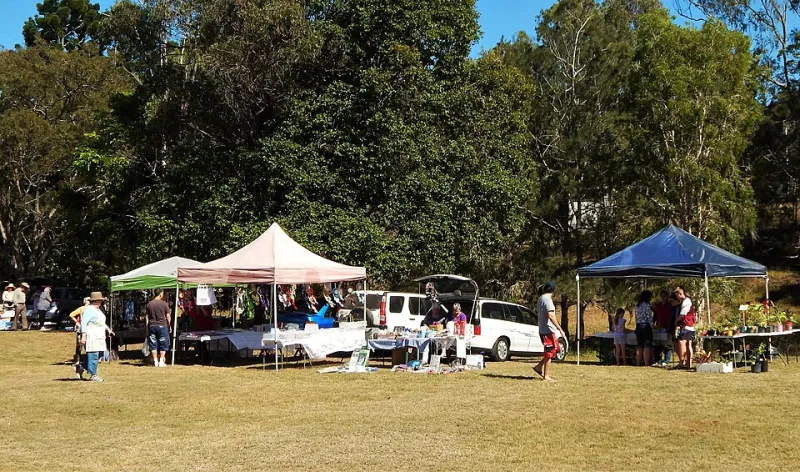
Photo: RegionalQueenslander, CC BY-SA 4.0, via Wikimedia Commons
You can buy anything online. That is the problem. The record you want is always available, always photographed in good light, always priced by someone who has already done the research for you.
Which is why a growing number of UK funk and soul fans have gone back to the field. Car boots, church halls, charity shops, house clearances, the back of a van at a village fete — this is where the good stuff still sits at prices that make sense. Not always. Not reliably. But often enough to keep you going back.
The rules of the boot
Car-boot etiquette is unwritten and strictly enforced. Learn it or get elbowed.
Arrive early. Not fashionable early — genuinely early, before the coffee van is open. Serious sellers unload while it is still dark and the trade buyers circle like herons.
Don't reach across a box someone is already in. Don't stack a seller's records on the ground to save your place. Don't ask "anything else under the table?" while three people are waiting behind you.
And do not haggle on a fifty-pence record. Just pay it. The scene is small and word travels.
One more: bring cash and bring coins. Card readers exist at car boots now, but the people with the interesting boxes are usually the ones with a biscuit tin.
The charity shop clock
Charity shops run on a rhythm. Deliveries land mid-morning on weekdays. Volunteers sort when they can. New stock reaches the floor when someone finishes the bag, not at a scheduled time.
Which means the reliable window is late morning to early afternoon, Tuesday to Thursday, in shops that are staffed enough to sort quickly. Weekend visits are a lottery — picked over by Saturday browsers and staffed by people who would rather be elsewhere.
A useful habit: get to know one or two shops properly rather than skimming twelve. Say hello. Buy something small now and then. Volunteers remember faces, and a volunteer who remembers your face will tell you when the records from a house clearance are coming out.
Regional quirks worth knowing
Britain is not one market. It is dozens, and they behave differently.
Northern mill towns and coastal retirement towns are quietly excellent. Older populations, houses full of records, fewer diggers competing. The market towns of the Midlands are hit and miss but the misses are cheap. London is picked clean inside the M25 — your best bets are the outer boroughs and the boot sales on the city's edges, and even then, go early or go home.
Scotland rewards patience. Rural Wales rewards it more. If you are making a day of it, drive an hour further than feels sensible. That is usually where the dead stock hasn't been turned over yet.
Reading a sleeve in ten seconds
You are standing in a field. You have four minutes before the next person arrives. Here is the fast filter.
Check the label first. A UK pressing on a known soul or funk imprint is worth a look. A generic budget label reissue of the same title usually is not, unless the original is genuinely rare.
Check the sleeve for a year and a catalogue number. Check for a cut corner, a punch hole or a promo stamp — those are often a sign of a decommissioned radio or shop copy, which can mean a clean record at a knock-down price.
Then the vinyl itself. Tilt it to the light. Light surface marks that don't catch a fingernail are usually fine. Anything that looks like a scratch you can feel is a paperweight disguised as a bargain.
And be honest about condition. Buying a battered copy because it's cheap and then never playing it is just clutter with a story attached.
Dead stock versus the real thing
A lot of what fills car-boot boxes is not rare — it is simply old. Easy listening, budget compilations, the same twelve disco albums in every box from Land's End to John o' Groats.
The good stuff looks different. It looks like it was bought by one person, played a lot, and filed carefully. Collections are recognisable: consistent genres, alphabetical order, the occasional handwritten name inside the sleeve.
If you find a collection, ask what else there is. Sellers rarely bring everything at once, and the second box is often better than the first.
Why the hunt is the point
The records are nice. The day out is better.
There is a whole social world happening at 7am in a wet field in the Home Counties — regulars who know each other's taste, dealers who will set something aside, the small thrill of handing a friend a sleeve and watching their face change. Group chats form around it. Routes get shared. Someone always knows a sale in a village hall next weekend.
That is not a nostalgic thing to say. It is just true. The marketplace gave us convenience and took away the part where you meet people.
So take a tenner, set an alarm, wear boots, and accept that you will come home with three good records and eleven questionable ones. The three are the reason you'll do it again next Sunday.